Stay informed
SIWI newsletter
Receive SIWI’s latest news, events, reports and jobs directly in your inbox.
You can unsubscribe at any time.

The world faces increasing pressure on available freshwater resources. Groundwater as well as the aquifers that act as their ‘hosts’ under-ground are significant in climate adaptation and resilience-building to buffer the effects of recurrent droughts. In securing future water supplies it is crucial that the narrative and the practice involve groundwater and aquifers, and also the transboundary systems underlying almost every nation on Earth. This is perhaps even more crucial in the case that the more exact subterranean boundaries and the hydraulic connections of the aquifers are not yet fully known.
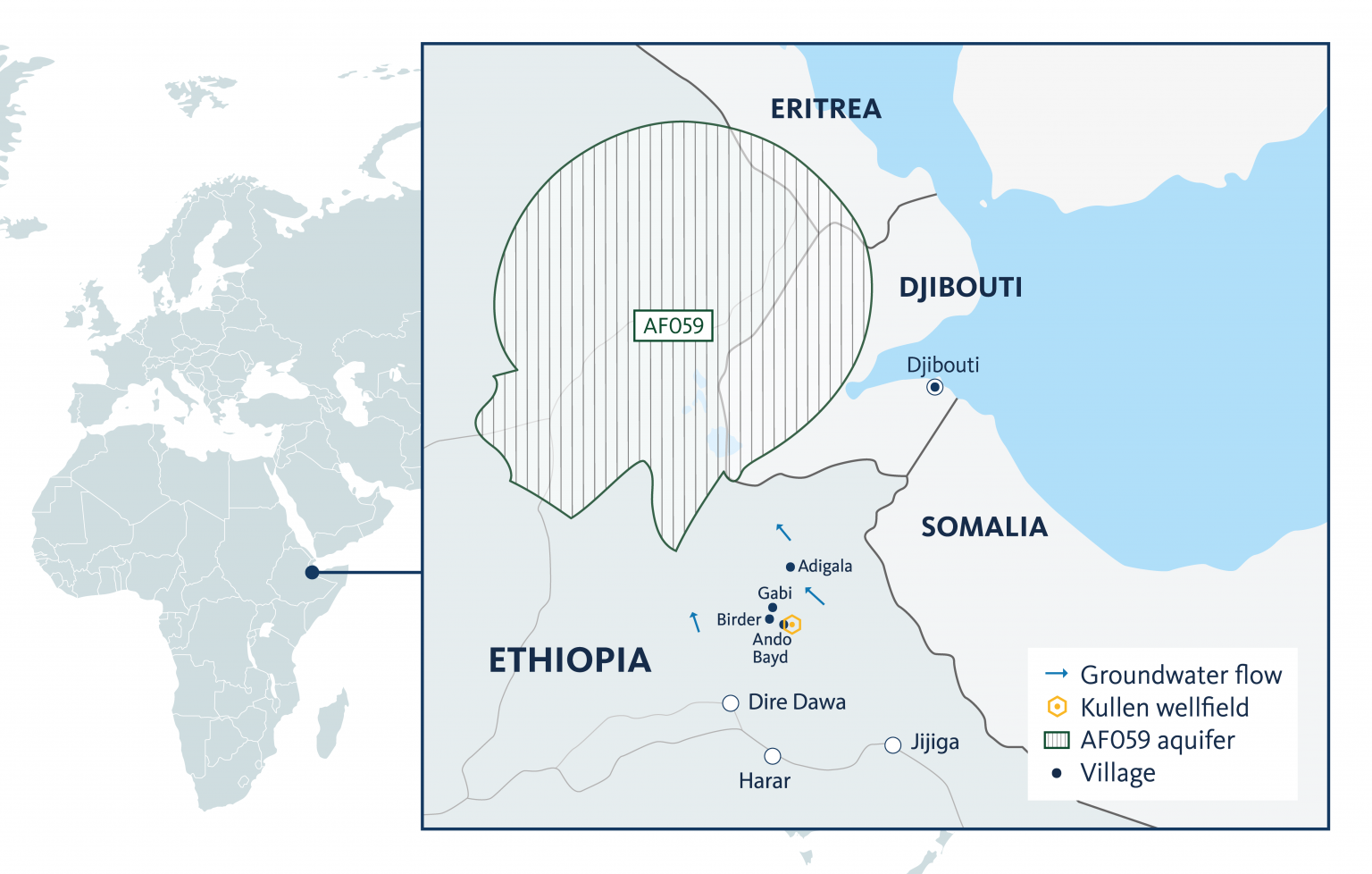
One such example is the Ethio–Djibouti Transboundary Water Project and the aquifer system it relies on, which may be interconnected with a partially mapped adjacent transboundary aquifer. Djibouti receives groundwater from a well-field across the border in Ethiopia to safeguard its drinking water provisions. This arrangement also benefits the Chinese Belt and Road Initiative. The case brings to the fore the international human rights law relevant to the water cooperation discourse.
Collaboration such as this, and the providing of technical assistance, contributes to achieving several Sustainable Development Goals and to the realization of the human rights to safe drinking water, sanitation, and a healthy environment. For improved groundwater governance, the policy and practice of the international community and donors as well as of concerned governments should, among other things,