Stay informed
SIWI newsletter
Receive SIWI’s latest news, events, reports and jobs directly in your inbox.
You can unsubscribe at any time.

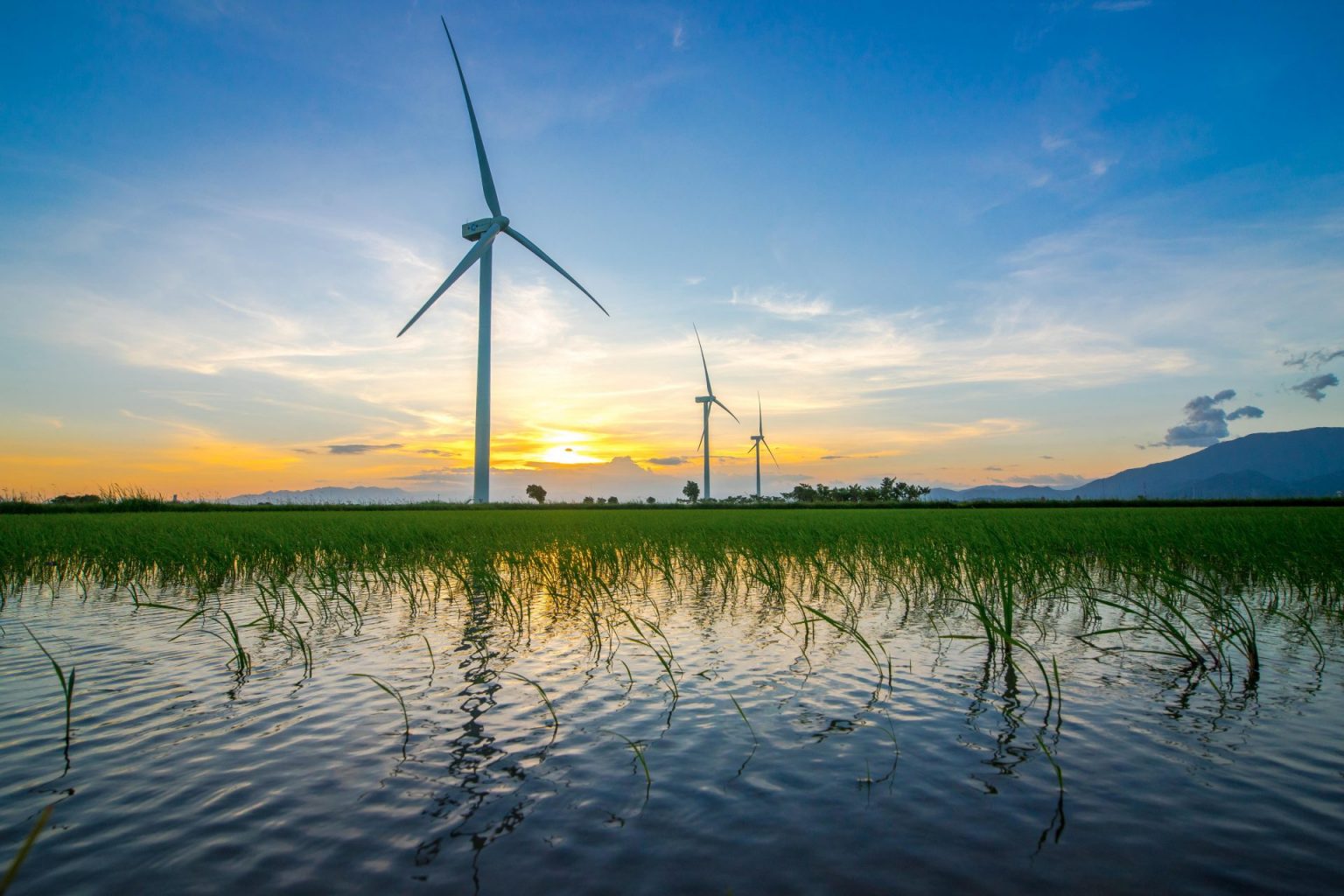
This Executive Summary, published ahead of the report, details the main areas of the research undertaken, and highlights the key messages which have come out of that.
In its Sixth Assessment Report on Mitigation of Climate Change, the International Panel on Climate Change (IPCC) has identified numerous climate mitigation measures that can provide a pathway to achieve rapid transition to net-zero emissions. Many of these measures have a direct link to freshwater.
It focuses on:
The report addresses the multiple freshwater-related synergies and trade-offs that exist between climate mitigation and adaptation measures. It highlights the benefits of water-wise mitigation actions working with nature, such as enhanced system resilience, functioning ecosystems and enhanced biodiversity, contributing to sustainable development.
The findings attest to the urgent need to improve the understanding of the links between the different climate mitigation measures, freshwater availability, and water management. It identifies high-potential water-related mitigation opportunities across the sectors and biomes where water management and nature-based solutions can contribute to reduce greenhouse gas (GHG) emissions and thus global warming. It further points out water-related risks to be avoided in mitigation planning to prevent uninformed and therefore unsustainable GHG mitigation planning from negatively impacting water resources.

Research Advisor Water Climate and Environment
malin.ingemarsson@siwi.org
+46 (0)703 00 26 66

Lan Wang Erlandsson, PhD
Research
Stockholm Resilience Centre
Water is the foundation of successful mitigation action: Earth's climate system and water cycle are deeply intertwined.
For our governance systems and national implementation plans to succeed we need to place water in its rightful place: at the heart of all efforts to adapt to, as well as to mitigate climate change.
The report starts with providing a background and context by introducing the biophysical interdependencies of freshwater’s role for climate mitigation, and the governance context of climate mitigation measures.
Chapter 2 focuses on the intricate relationship between climate and water in the larger context of the Earth system. It explains how climate mitigation measures fundamentally depend on, and impact, freshwater resources and the water cycle and why a functioning freshwater cycle is crucial for climate mitigation measures to reach their full potential.
Chapter 3 provides an overview of the global governance frameworks and national instruments relating to climate change, biodiversity, land, water, and sustainable development. It also covers various financing mechanisms and instruments available to realise the goals outlined in these frameworks. The review points out the existing barriers to achieve climate mitigation as leverage points are not capitalised on, and risks are not accounted for. It also highlights that integrated approaches are needed to overcome these barriers.
The second part provides an analysis of climate mitigation measures, keying in on their use of, and impacts on, freshwater and freshwater-dependent systems.
Chapter 4 examines the mitigation potential and risks in drinking water and wastewater management. It includes abstraction, treatment, distribution and discharge, and accounting for both direct and indirect GHG emissions including the electricity consumption associated with indirect carbon emissions. Lowering the release of these GHGs presents major opportunities for climate change mitigation.
Chapter 5 examines mitigation potential and risks in freshwater ecosystems. Aquatic environments, such as freshwater peatlands, marshes, swamps, lakes, streams, rivers, and tidal wetlands, can function as either GHG sources or sinks, depending on their use and the climate. To account for the emission reduction services from freshwater systems, it is necessary to include them as part of a portfolio of measures to reduce GHG emissions.
Chapter 6 examines mitigation potential and risks in land systems. Mitigation measures in land systems can have notable synergies but also trade-offs with local-to-regional water sustainability goals. Land system mitigation measures have the potential to decrease soil erosion, increase groundwater recharge, and increase water vapour exchange with the atmosphere, thereby enhancing local cooling and regional rainfall. Misguided implementation of land system mitigation measures can, on the other hand, cause local water shortage, biodiversity loss, and harm to local communities.
Chapter 7 examines the water-related climate mitigation potential and risks of low-emission energy transition plans. To enable the transition to renewable energies, strategies are also needed to mitigate potential water risks for energy storage solutions, including pumped hydropower, as well as mining for minerals. Low emission energy scenarios often lack quantification of impacts on water quality and ecosystems, which must be incorporated in national, local and regional planning.
The third part draws cross-sectoral conclusions building on the findings in Part II, identifying priority risks and opportunities for water-wise climate planning, including ‘win-wins’.
Chapter 8 presents priority water risks that need to be evaluated in climate mitigation plans. Building on Part II, this chapter outlines opportunities to effectively mitigate emissions through measures taken in water and sanitation services and the protection, restoration and management of ecosystems. The chapter also touches upon key issues for climate mitigation that are beyond the scope of this report, including industrial processes and design, transport, solid waste management, as well as issues related to diet, sustainable consumption and behavioural change.
Chapter 9 demonstrates the need for integrated approaches to achieve water-wise climate mitigation. This chapter provides an overview of some of these approaches, including Integrated Water Resources Management (IWRM), the Water-Energy-Food Nexus approach, Source-to-Sea (S2S), the Landscape approach, and Integrated Urban Management, each exemplified through case studies.
The Executive Summary was initially presented at the Unpacking freshwater’s role in climate change mitigation Side Event at the SB56 UN Climate Change Conference in Bonn, Germany, on June 13 2022.

United Nations Development Programme (UNDP)
German Corporation for International Cooperation (GIZ)

Stockholm Resilience Centre (SRC)

The Potsdam Institute for Climate Impact Research (PIK)
UNDP-SIWI Water Governance Facility
Federal Ministry of Economic Cooperation and Development of Germany (BMZ)