Stay informed
SIWI newsletter
Receive SIWI’s latest news, events, reports and jobs directly in your inbox.
You can unsubscribe at any time.

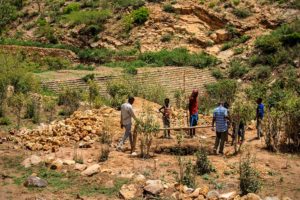
For some time, the water challenges of Ethiopia have been compounded by lacklustre policy frameworks for water resource management, as well as ineffective institutional arrangements for policy, regulation, implementation, and enforcement. The glaring examples of water resource management failures in Ethiopia include the demise of Lake Haramaya, the shrinking of Lake Abijata, the pollution of Awash River and Ziway and Hawassa Lakes; and siltation of Koka and Gilgel Gibe Dams and many other smaller micro-dams.
In response to these water security and governance issues, Ethiopia adopted the principles of Integrated Water Resources Management, but the implementation is constrained by capacity limitations and lack of coordination amongst the key government institutions and other stakeholders.
It is against this context that the Ethiopia Water and Landscape Governance programme seeks to strengthen the capacity of the federal government of Ethiopia, particularly the Ministry of Water, Irrigation and Energy, and other relevant institutions to accelerate implementation and institutionalization of Integrated Water Resources Management, to achieve sustainable water governance and water use.